
Before you’ve even set your bags down in Marrakech, someone will likely hand you a glass of sweet mint tea. It isn’t a tourist gimmick — it’s one of the oldest and most consistent rituals in Moroccan daily life, poured in homes, shops, offices and roadside cafés alike, and understanding it will make you appreciate the gesture far more than just sipping and moving on.
Where the Tradition Comes From
Tea itself arrived in Morocco relatively late, via trade with Europe in the 18th and 19th centuries, but it fused so thoroughly with existing local hospitality customs and North African mint and sugar that it became something distinctly Moroccan. Green gunpowder tea, fresh spearmint (nana), and a generous amount of sugar are the three non-negotiable ingredients — what varies by household is the ratio, and everyone believes their grandmother’s version is the correct one.
The Ritual Itself
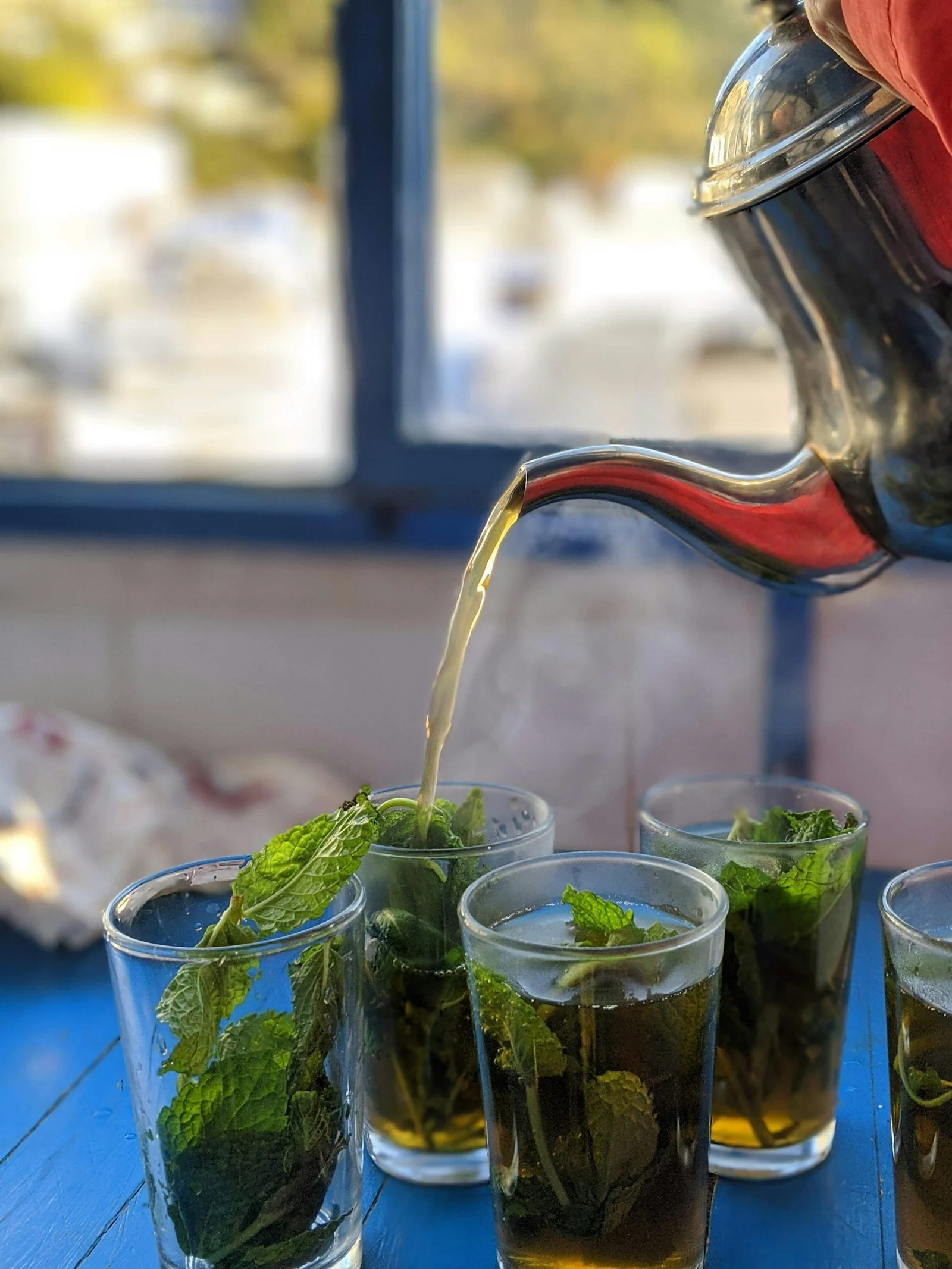
Making tea properly is deliberately theatrical. The tea leaves are rinsed, brewed briefly, and mint is packed into the pot before the whole thing is poured from a height into small glasses — not for show, but to aerate the tea and build a thin foam on top, considered a sign it’s been made well. It’s often poured, tasted and adjusted more than once before it’s finally served.
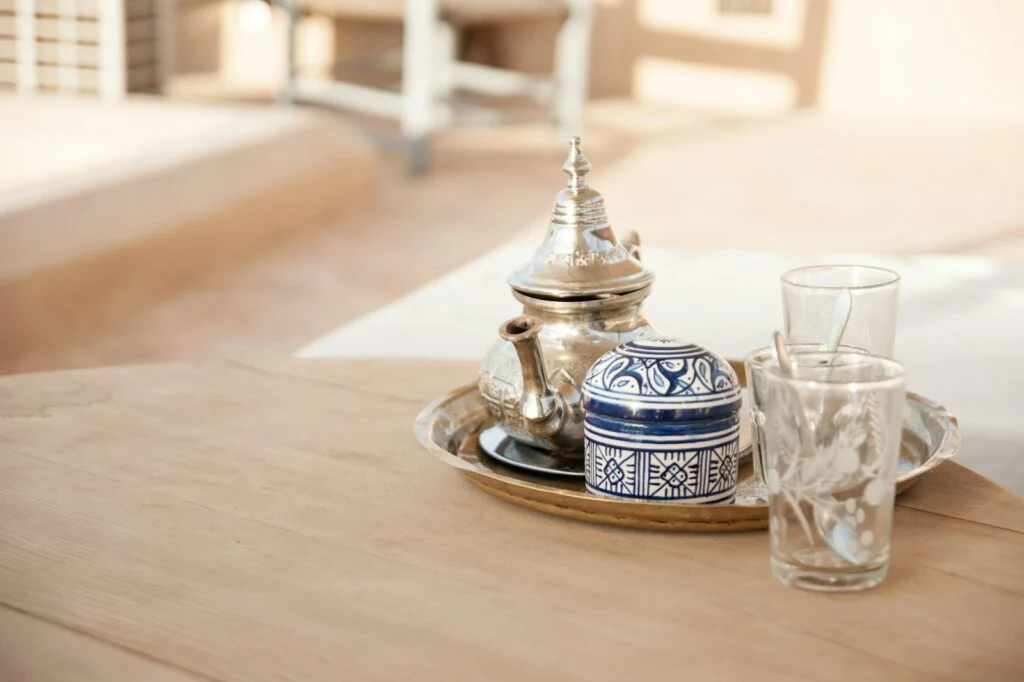
Why It’s Called “Berber Whiskey”
Since alcohol is generally avoided in Muslim culture, mint tea has taken on a similar social role to a drink shared among friends — hence the half-joking nickname “Berber whiskey,” used by Moroccans themselves. It’s what’s offered when you’re negotiating in the souk, visiting someone’s home, or simply taking a break, and turning it down outright can come across as brushing off the hospitality behind it, even when no offense is meant.
Etiquette Worth Knowing
- Accept at least a small glass if it’s offered in a home or shop — you’re not obligated to buy anything in return.
- It’s normal to be offered a second or even third glass; a light “no thank you” is enough if you’re full.
- Don’t expect it unsweetened — sugar is part of the recipe, not an optional add-on, though some places will make it lighter on request.
- Watch the pour if you get the chance — a skilled host pouring from height is genuinely worth watching.
Tea’s Role in Moroccan Hospitality
The mint tea ritual is really just one visible piece of a much broader hospitality culture that shapes daily life across Morocco, from the souks of Marrakech to family homes in the Atlas Mountains — a culture documented in more depth on Morocco’s Wikipedia page. Guests are rarely, if ever, left empty-handed, and tea is usually the fastest way a host has to make that hospitality tangible within minutes of you arriving.
Regional Twists on the Ritual
While the core recipe stays fairly consistent nationwide, small variations show up by region and household: some families in the south add a sprig of wormwood (chiba) during winter months for a more bitter, warming edge, while others swap in verbena or wild thyme depending on what’s growing locally. The amount of sugar also varies more than visitors expect — some households serve tea nearly syrupy sweet, while others now offer a lighter version on request. None of these variations are considered more “correct” than another; they’re simply regional and family preference, and part of what makes trying tea in different homes and riads genuinely interesting.
Where to Experience It in Marrakech
You’ll be served mint tea almost everywhere — in riads, on rooftop terraces, in carpet shops mid-negotiation, and certainly on any of our Marrakech tours and desert experiences, where a tea break is often built into the day. If you want to understand the ceremony in its proper setting, spend time wandering the medina itself — our Marrakech destination guide covers the neighborhoods where you’ll find the most authentic, unhurried tea culture, away from the more tourist-facing cafés around the main square.
Bringing the Ritual Home
- Buy a small teapot (berrad) and two or three tea glasses from the souk — they’re inexpensive and genuinely useful.
- Look for Chinese gunpowder green tea and dried or fresh spearmint, not peppermint, which changes the flavor.
- Rinse the tea leaves briefly with hot water before brewing to remove bitterness.
- Practice the height pour outside first — it’s messier than it looks on your first attempt.
Common Mistakes First-Timers Make
A few small missteps are easy to avoid once you know them: using peppermint instead of spearmint changes the flavor noticeably and isn’t traditional; skipping the height pour means missing the light foam that signals a well-made glass; and steeping the tea for too long, rather than briefly, tips the balance toward bitterness instead of the intended bright, sweet profile. None of these ruin a cup, but getting them right is what separates a decent homemade attempt from the real thing you’ll taste in a Marrakech riad.
If a glass of mint tea is your introduction to Moroccan hospitality, let a well-planned trip be the rest of it. Get in touch with Morocco Best Destination at contact@moroccobestdestination.com or +212 661-757505 and we’ll help you build an itinerary around the traditions, not just the sights.