
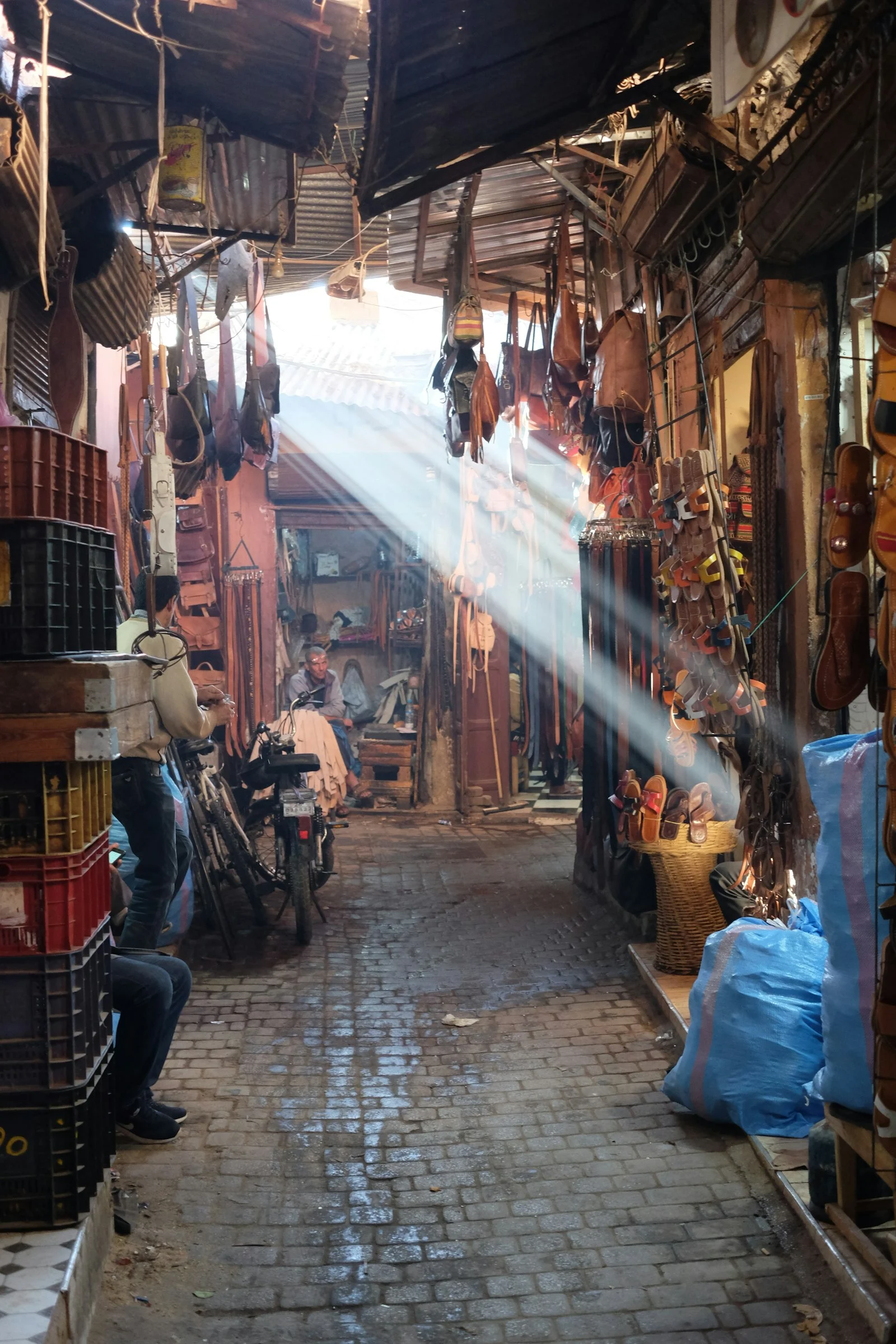
The Marrakech medina is one of those places that rewards getting a little lost, but only up to a point. Beyond that point it’s just frustrating, especially in the heat with limited water. Having walked these lanes with guests more times than we can count, here’s our honest guide to what’s worth seeing and how to actually enjoy the experience rather than just survive it.
Jemaa el-Fnaa: start here, but come back at night too
The main square is the medina’s beating heart, and it genuinely transforms between day and night. Daytime brings orange juice stalls, henna artists and snake charmers; by evening it fills with food stalls, storytellers, musicians and a completely different energy. See it both times if your schedule allows, they feel like two different places.
The souks: how to actually navigate them
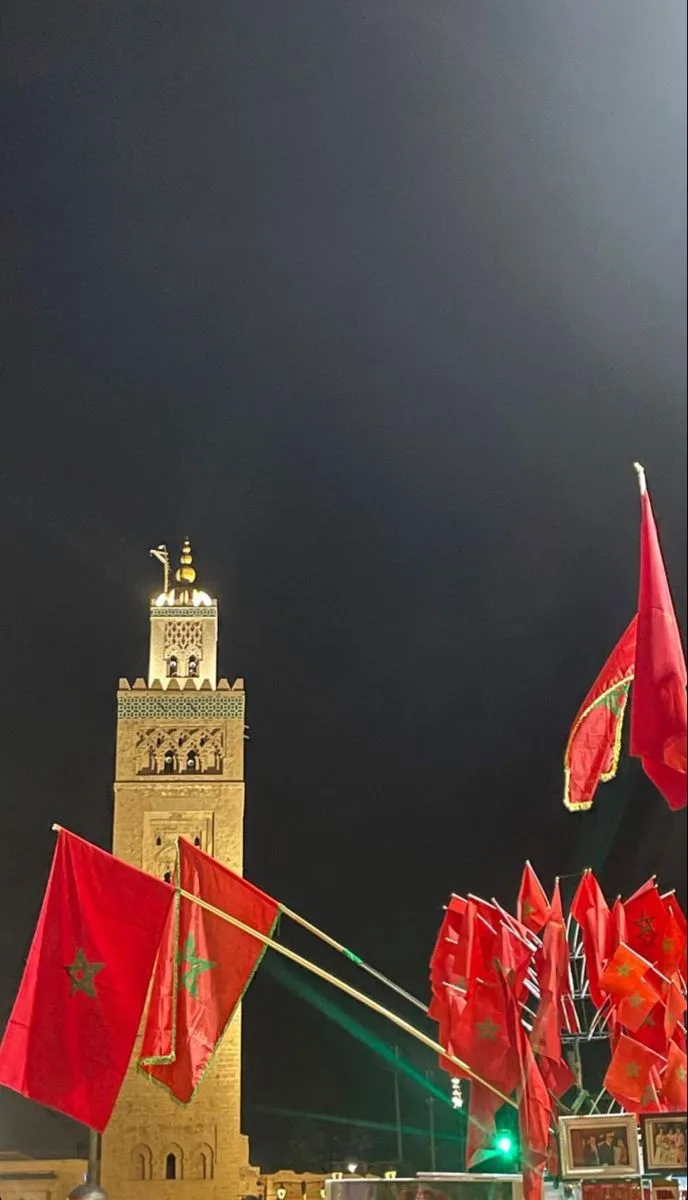
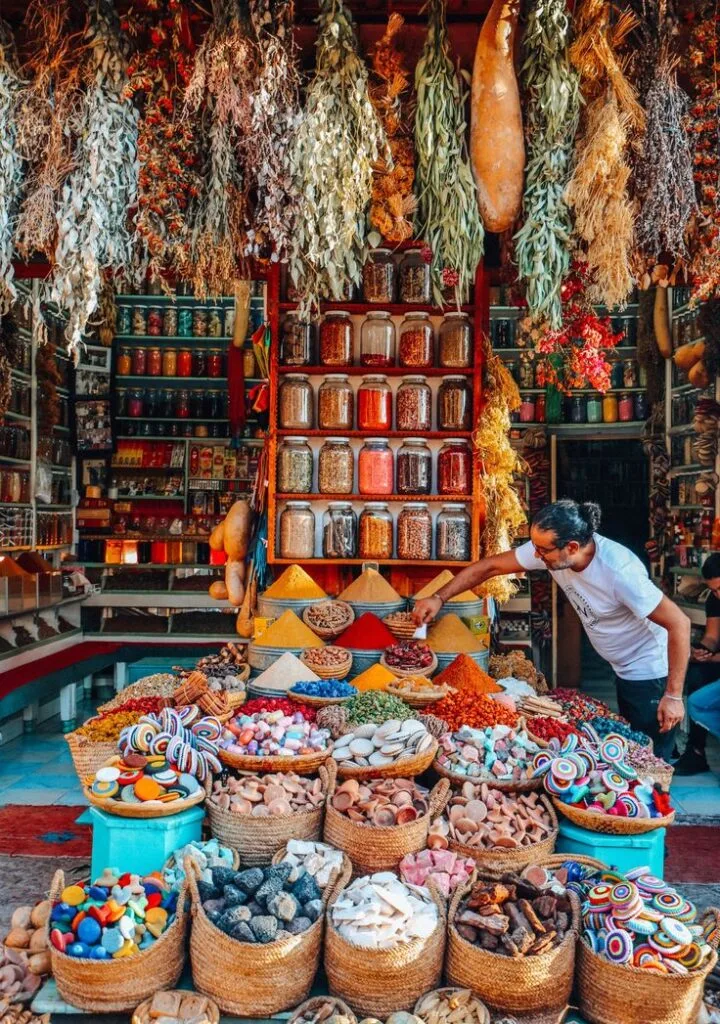
North of the square, the souks split into rough specialty zones, leather in one area, metalwork and lanterns in another, textiles and rugs further along, spices closer to the square. There’s no strict grid, so don’t fight it, use landmarks (a particular gate, a specific mosque minaret) rather than trying to memorise turns. Bargaining is expected and part of the culture, start around 40-50% of the asking price and settle somewhere in the middle, done with good humour rather than aggression.
Palaces and historic sites worth your time
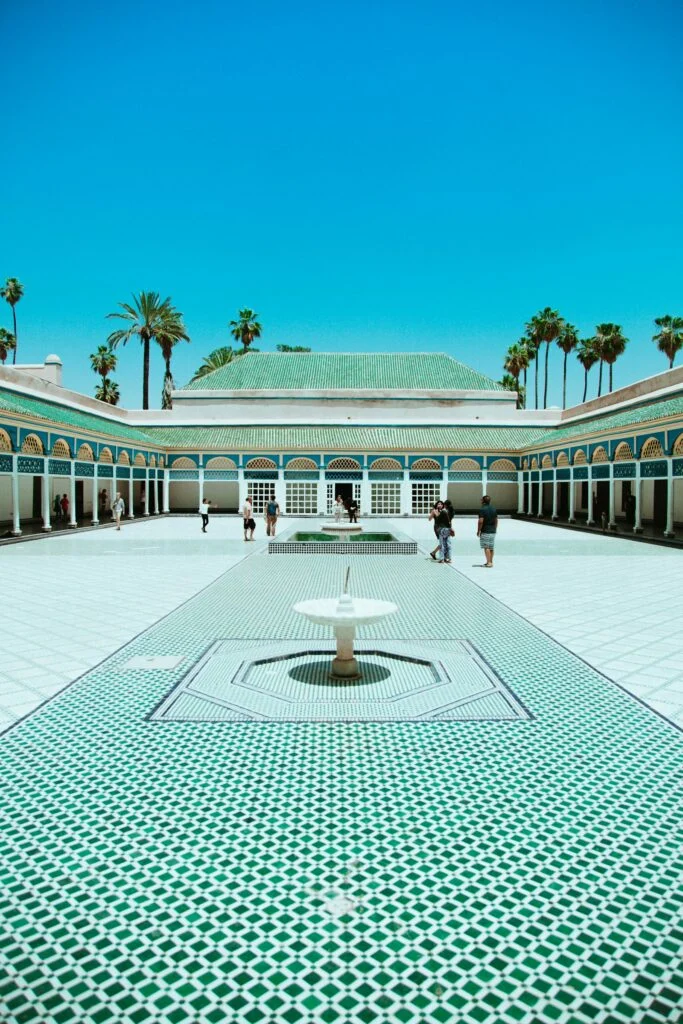
- Bahia Palace: intricate 19th-century courtyards and painted ceilings, one of the medina’s most photogenic interiors
- El Badi Palace: mostly ruins now, but the scale gives a real sense of Saadian-era ambition, plus storks nesting on the walls
- Saadian Tombs: a small but stunning site, arrive early since it draws long queues by mid-morning
- Ben Youssef Madrasa: a former Islamic college with extraordinary zellige tilework and carved cedar
Hidden gems beyond the main circuit
The medina’s quieter northern residential lanes, away from the main tourist axis, are where you’ll find working neighbourhood hammams, small family-run tea shops, and craftsmen’s workshops that don’t cater specifically to tourists. It’s a good area to wander with no fixed destination for an hour, just be ready to retrace your steps if you’re not confident navigating back.
Making the most of a guided visit
For a first visit especially, a local guide genuinely pays for itself, not just in avoiding wrong turns, but in unlocking context you’d otherwise miss entirely, why a particular door is carved a certain way, which workshop still uses centuries-old techniques. Our guided tour of the Marrakech medina, palaces and souks covers the main landmarks plus some of these quieter corners, paced so you’re not rushed between stops.
Food stops worth planning around
Beyond the famous Jemaa el-Fnaa food stalls, the medina hides smaller kitchens serving a single dish done well, a bakery known only for its almond msemen, a stall that’s sold the same harira recipe for decades. These places rarely have signs in English, and half the fun is asking your riad host or guide for a personal recommendation rather than searching online. Building one unplanned food stop into your day, rather than mapping every meal in advance, tends to produce the best stories by the end of a medina day.
Shopping smart: what’s actually worth buying
The medina sells plenty of mass-produced souvenirs alongside genuine craftsmanship, and telling the two apart takes a bit of practice. Handwoven rugs, hand-tooled leather goods, and hand-painted ceramics from workshops rather than storefronts tend to hold up far better than the shinier tourist-facing versions near the main square. If a specific craft interests you, spices, argan oil, leather, textiles, asking your riad host for a trusted seller they personally use is generally more reliable than picking the first shop with the friendliest doorman.
Practical medina tips
- Wear comfortable, closed shoes, the cobblestones and uneven ground are hard on sandals
- Carry small denomination cash, most souk vendors and small cafes don’t take cards
- Politely decline unsolicited “guides” offering directions you didn’t ask for
- Save your riad’s address in French or Arabic script to show a local if you need directions
- Plan a break, a rooftop cafe or a resort pool day pass with dinner is a great way to recover after a full day of walking
Getting there and back
Most riads sit within the medina itself or just at its edge, and porters will typically meet you at the nearest accessible point since cars can’t enter the narrowest lanes. If you’re arriving straight from the airport, our private Marrakech airport transfer gets you as close to your riad as vehicle access allows, with a driver who knows exactly where to drop you.
Marrakech’s medina is recognised as a UNESCO World Heritage Site, and its status is documented on UNESCO’s Morocco heritage listing, a fitting reflection of just how much history is packed into these lanes.
If you’d like a guide who knows exactly which turns to take and which stalls are worth your time, our Marrakech-based team is happy to help plan your medina day. Reach us at contact@moroccobestdestination.com or +212 661-757505.