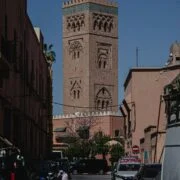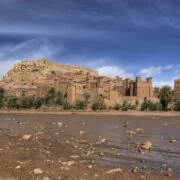

Fes el Bali, the old medina of Fes, is often described as the largest car-free urban area in the world, a maze of some 9,000 alleys that has functioned continuously since the 9th century. It’s a different experience from Marrakech‘s medina — older, denser, and genuinely easy to get lost in, which is honestly part of what makes it worth visiting.
Getting to Fes
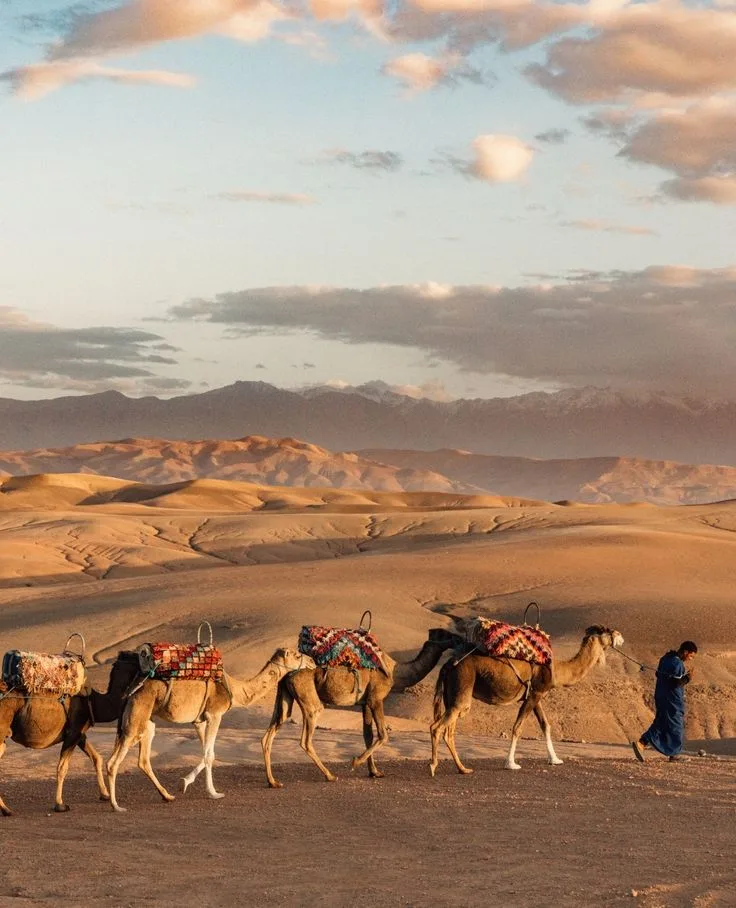
Fes sits well north of Marrakech, and most visitors reach it as part of a longer itinerary rather than a standalone trip. Our 4-day Marrakech to Fes desert tour routes through the Sahara before arriving in Fes, and the 10-day Morocco tour extends that same route further north to Chefchaouen. If you’re flying directly, our Fes airport transfers handle the connection from the airport into the medina area.
What to See in Fes el Bali
The Chouara Tannery
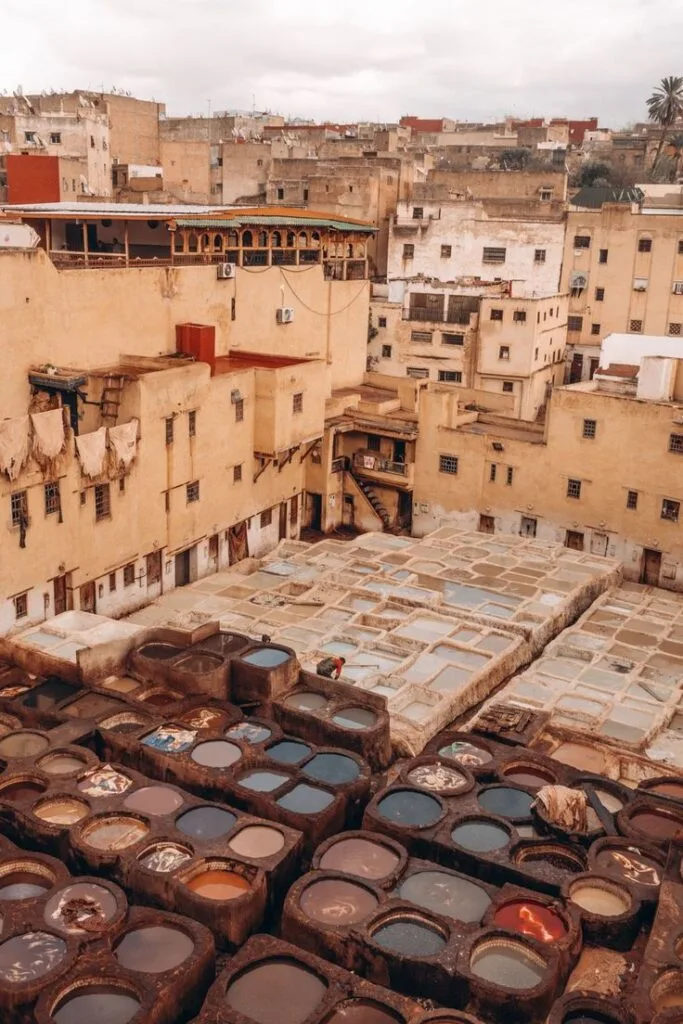
The most famous sight in Fes, where hides are still dyed by hand in stone vats arranged like a honeycomb, a process largely unchanged for centuries. Most leather shops around the tannery let you view it from a terrace and hand you a sprig of mint to offset the smell — take it, you’ll want it.
Al Quaraouiyine and the Madrasas
The University of Al Quaraouiyine, founded in 859, is recognized by some historians as the oldest continuously operating institution of higher learning in the world. Nearby, the Bou Inania and Attarine madrasas showcase some of the finest zellige tilework and carved plaster in the country, with courtyards open to visitors.
Bab Boujloud
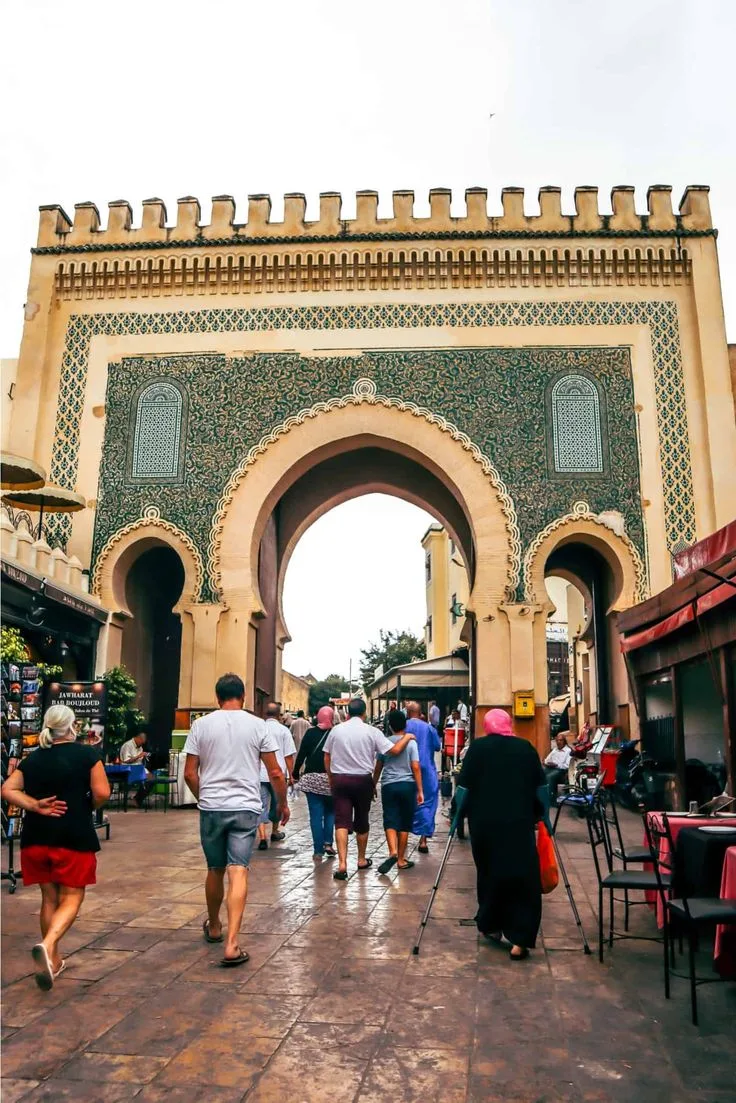
The blue-and-green tiled gate marking the main entrance to the medina, a natural starting and ending point for a day of wandering, with food stalls clustered just inside.
The Souks
Fes’s souks are organized by craft the way they have been for centuries — metalworkers, weavers, spice sellers — making it easy to find a specific item if you know which lane to look in, though half the fun is not knowing.
Tips for Navigating the Medina
- Accept that you will get lost — it’s normal, and most alleys eventually lead back to a main gate or landmark
- A local guide for at least your first few hours saves significant time and frustration
- Politely decline unsolicited “guides” who approach you on the street; arrange one through your riad or a licensed service instead
- Wear closed shoes; medina floors near the tanneries and butcher stalls can be uneven and wet
- Keep your phone charged for maps, but don’t rely on GPS pins inside the deepest alleys
A Suggested Day in the Medina

- Start at Bab Boujloud in the morning before the heat and crowds build
- Visit Bou Inania Madrasa for tilework and courtyard architecture
- Continue to the Chouara Tannery for the terrace view
- Wander the souks toward Al Quaraouiyine
- Finish with lunch at a rooftop terrace overlooking the medina rooftops
Beyond the Main Sights: Everyday Fes
Away from the tanneries and madrasas, Fes el Bali is still a functioning residential city, and some of the most memorable moments come from the ordinary details rather than the headline attractions: a donkey loaded with goods squeezing past in a lane barely wide enough for two people, a bakery where families drop off dough to be baked in a communal wood-fired oven, or the metallic hammering rhythm of the coppersmiths’ souk carrying down an entire street. Fes is also historically significant as one of Morocco’s four imperial cities, and that layered history shows in details easy to miss on a rushed visit — carved wooden lintels above unassuming doorways, faded but original zellige patterns in courtyards that aren’t official monuments at all, just someone’s home.
Fes vs Marrakech’s Medina
If you’ve already explored Marrakech’s medina, Fes will feel older, quieter in tone despite being denser in layout, and less oriented around tourist shopping. It rewards slower exploration and, honestly, benefits more from a guide than Marrakech does, given the sheer scale of the alleys.
Fes el Bali is recognized by UNESCO’s World Heritage listing for Morocco as one of the best-preserved historic medieval Islamic cities, which explains why so much of it still functions exactly as it always has, rather than being reconstructed for visitors.
Fes as an Imperial City
Fes held the status of Morocco’s capital under several dynasties, and that political history shaped the medina’s layout and scale in ways still visible today. Unlike cities built or expanded primarily for trade, Fes el Bali grew around religious and educational institutions, which explains the concentration of madrasas and the continued prominence of Al Quaraouiyine at its center. The Royal Palace (Dar al-Makhzen), with its famous brass-studded golden gates, sits at the edge of the medina in the newer Fes el-Jdid quarter and remains an active royal residence, so it’s viewed from outside rather than entered, but the gates alone are worth the short walk from the old medina for photographs.
When to Visit
Spring and autumn bring the most comfortable walking temperatures for a full day on foot. Summer can be hot and the tannery smell more intense; winter is cooler and quieter, a good option if you prefer fewer crowds in the narrow lanes.
If you’d like a guided route through Fes el Bali built into a longer trip from Marrakech, or help arranging the airport transfer to match your flight, reach out to contact@moroccobestdestination.com or +212 661-757505 and our team will put together the details.