
People ask us this question almost every day at the office: “when should I come?” The honest answer is that Morocco doesn’t have one perfect season, it has several good ones depending on what you want to do. If you’re chasing cool nights under the stars in the Sahara, that’s different from wanting to lie by a pool in Marrakech or hike in the High Atlas. Here’s how we, as a Marrakech-based agency who runs tours year-round, actually think about the calendar.
Spring (March to May): the sweet spot
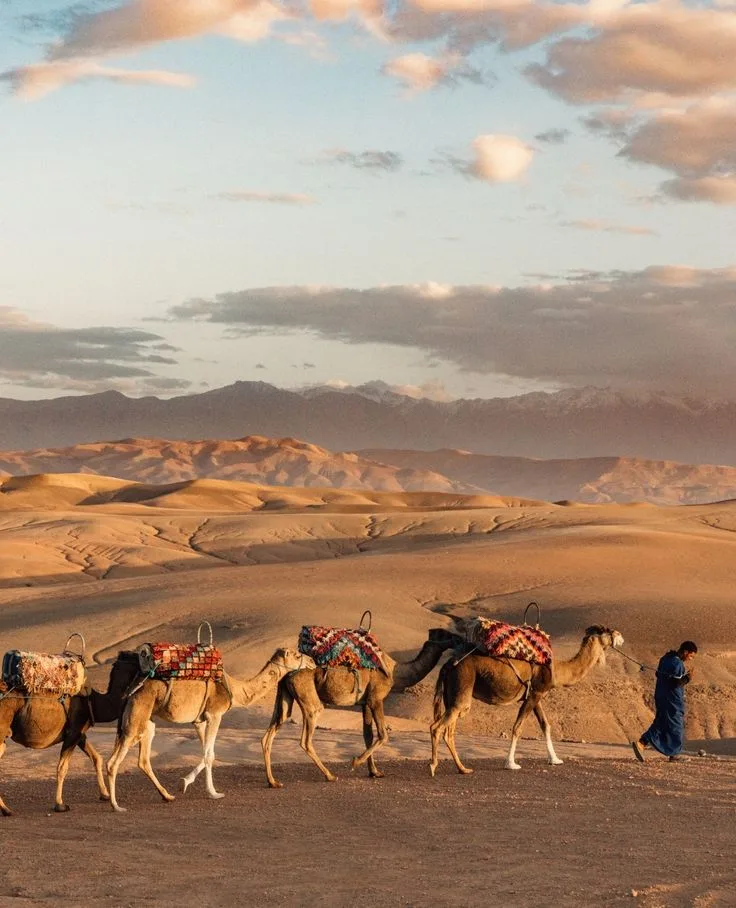
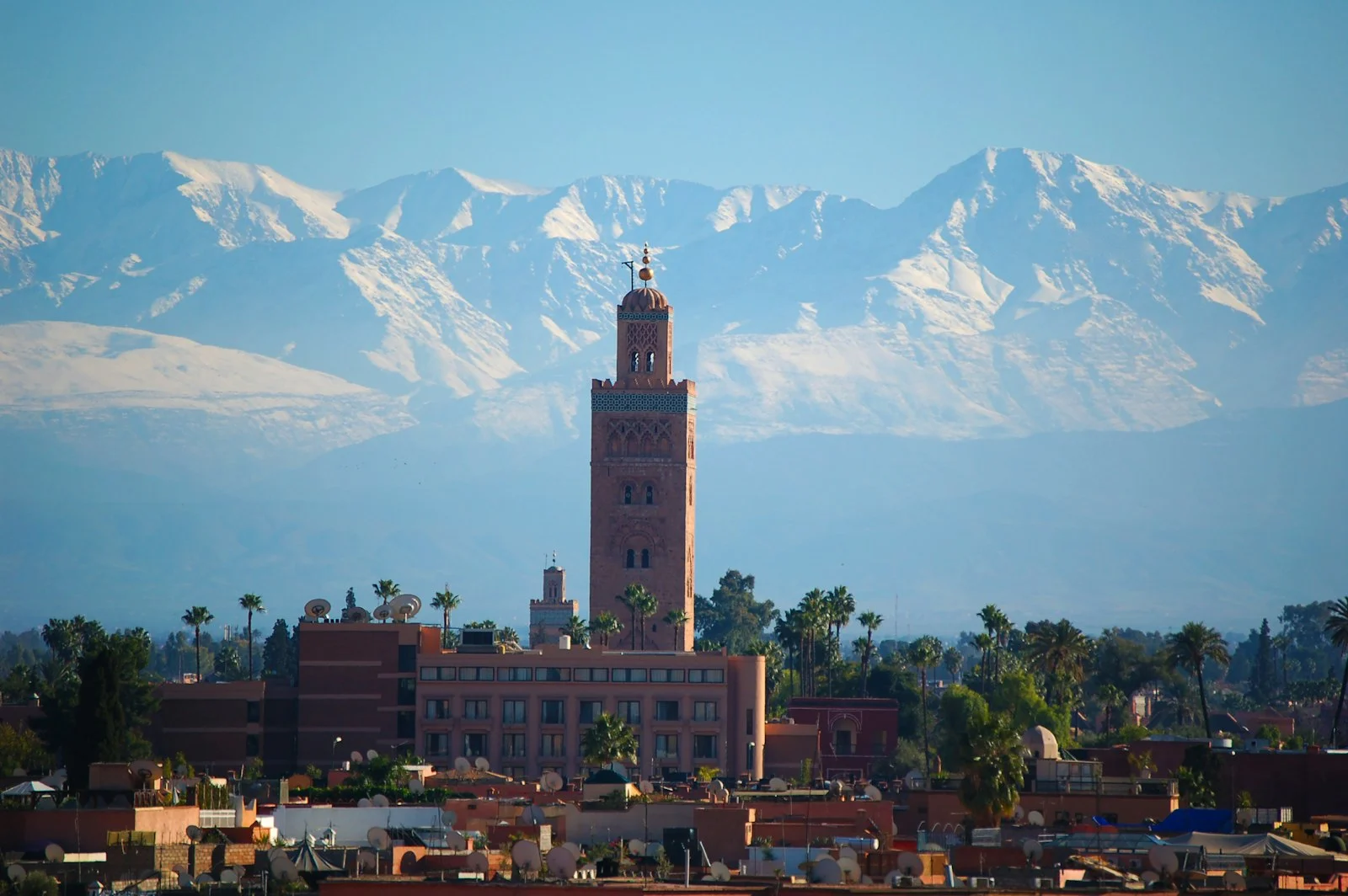
This is the season we recommend to most first-time visitors. Daytime temperatures in Marrakech sit comfortably between 20-27°C, the Atlas Mountains still have snow on the high peaks which makes for dramatic photos, and the desert dunes near Merzouga are warm during the day without being punishing. Almond and orange blossoms are out in April, and the light in the late afternoon is spectacular for photography. If you’re planning a 3-day desert tour to Merzouga, spring gives you comfortable riding conditions on the camel trek and pleasant nights at camp, not too cold, not too hot.
Summer (June to August): hot, but not everywhere
Marrakech in July and August regularly hits 38-42°C, and the Sahara can climb even higher during the day. It’s not impossible to visit, riads have pools and thick walls that keep interiors cool, but it does change how you spend your day: mornings and evenings for sightseeing, afternoons for shade or a pool. Summer is actually a great time for the coast, Essaouira stays breezy and mild thanks to the Atlantic, and it’s a good window for the Atlas Mountains, where altitude keeps temperatures far more bearable than the plains below.
Autumn (September to November): our other favourite window
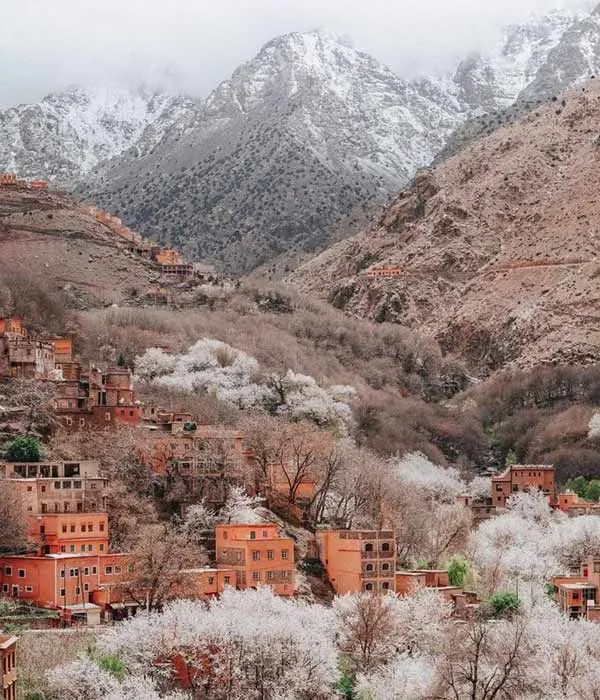
September through November mirrors spring in a lot of ways: warm days, cool evenings, and clearer skies after the summer haze settles. The desert nights start getting genuinely cold by late October and into November, which for a lot of travellers is part of the magic of camping under a full sky of stars. This is a strong period for longer multi-region trips, if you have the time, our 10-day tour covering the desert, Fes and Chefchaouen works beautifully in autumn because you’re moving through very different climates and elevations along the way.
Winter (December to February): cold nights, clear days
Winter surprises a lot of visitors. Marrakech days are usually mild, 18-20°C and sunny, but nights drop sharply, and riads without central heating can feel cold indoors. The Sahara is the extreme version of this: gorgeous blue skies during the day, but temperatures near freezing after sunset, so proper layers matter. Winter is actually low season for tourism, which means better availability and a quieter medina, if you don’t mind packing a warm jacket for the evenings.
Ramadan and religious holidays
Morocco observes Ramadan, and the dates shift each year on the lunar calendar. During this month many local restaurants change their hours and some close during daylight hours, though tourist-oriented restaurants and hotels generally continue serving visitors normally. It’s not a reason to avoid Morocco, but it’s worth knowing so you can plan meals accordingly and be respectful of local customs in public spaces.
How the desert calendar differs from the city calendar
One thing we always stress to guests: Marrakech’s “good weather months” and the desert’s “good weather months” don’t line up perfectly. A week that feels ideal in the city, say, a mild week in December, can still mean a bitterly cold night at a desert camp near Merzouga. Conversely, a July week that’s uncomfortably hot in Marrakech can still work reasonably well for an early-morning or late-afternoon desert excursion if you plan the timing around the heat rather than against it. When guests ask us to help time a multi-region trip, this is usually the first thing we walk through, because the “best month” answer genuinely changes once the desert enters the itinerary.
Booking timing and availability
Spring and autumn are our busiest seasons, which means popular desert camps and riads can book out weeks in advance, especially around European and North American school holidays. If your travel dates are flexible, shoulder periods just before or after peak season (early March, late May, or November) often give you nearly identical weather with noticeably more availability and better rates. Winter, by contrast, is when we have the most flexibility to accommodate last-minute changes and custom routing, simply because fewer groups are travelling.
Quick month-by-month cheat sheet
- January-February: mild days, cold nights, quiet season, good hotel rates
- March-May: ideal all-round weather, best for hiking and desert trips
- June-August: hot inland, good for coastal towns like Essaouira and mountain retreats
- September-October: warm and clear, excellent for multi-day itineraries
- November-December: cooling fast, magical starry desert nights, pack layers
How the coast changes the equation
If your itinerary includes time on the Atlantic coast, Essaouira or the northern beaches, the calendar shifts again. Coastal towns run noticeably cooler and windier than Marrakech year-round, which makes them a genuinely smart escape valve during the hottest inland months, but it also means a January coastal stop can feel raw and blustery in a way that surprises visitors expecting uniform “Morocco warmth.” We often suggest guests treat the coast as its own micro-climate when planning a multi-stop trip, rather than assuming it will track the same temperature curve as the desert or the Atlas.
What we recommend based on your priorities
If photography and comfortable temperatures matter most, aim for April-May or October. If you want a beach-and-mountain combination without desert heat, summer works fine if you plan your days around it. If budget and fewer crowds matter more than warmth, winter is genuinely underrated. According to Morocco’s geography, the country spans coastal, mountain and desert climate zones within a few hours’ drive of each other, which is exactly why the “best” month depends entirely on your route.
Whatever month you’re eyeing, we can help you build the right itinerary around it. Browse our full range of tours and experiences, or reach out directly to our team at contact@moroccobestdestination.com or +212 661-757505 and we’ll match a route to your travel dates.