
Thirty minutes outside Marrakech, the city glow fades fast and the sky over the Agafay Desert opens up in a way that surprises most first-time visitors. This is not the deep Sahara, but the stony plateau sits high enough and far enough from artificial light that on a clear, moonless night you can see the Milky Way with the naked eye – something almost impossible from inside the medina. If stargazing is on your list, here is what actually matters for finding the darkest, clearest patch of sky.
Why Agafay Works So Well for Stargazing
Agafay’s advantage over the coast or the city is elevation combined with low humidity – the plateau sits on dry, rocky terrain with almost no light pollution once you are a few kilometers past the last farms. Unlike Merzouga, which requires a two-day journey, Agafay is close enough to Marrakech for an evening trip, which is exactly why overnight camps here have become so popular with travelers who want a Sahara-style night sky without the long drive. On a genuinely clear night it’s common to pick out several thousand stars with the naked eye alone, far beyond what’s visible from any city rooftop in Marrakech, and no telescope is required to appreciate the difference.
The Best Spots Within Agafay
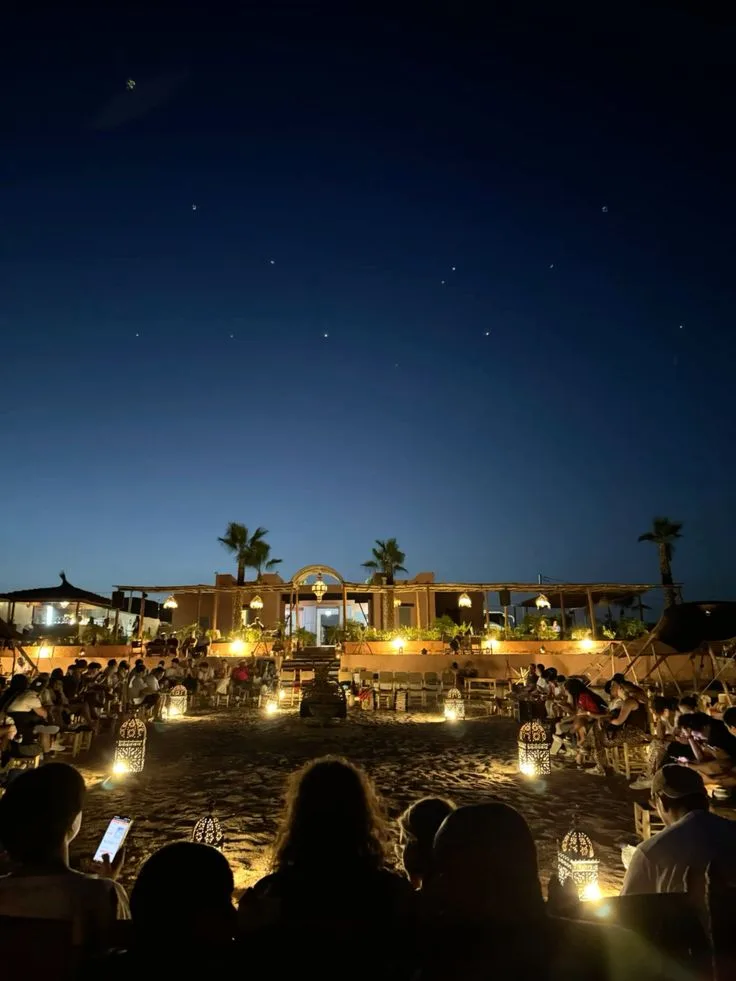
Not every corner of Agafay is equally dark – proximity to camp generators, nearby roads and the odd hotel complex can create small pockets of glow. The best experience comes from staying at a proper desert camp set back from the access road, where the fires are kept low after dinner and the camp itself faces open plateau rather than the city lights of Marrakech on the horizon. Our Agafay Desert Overnight Camp & Dinner Show is set up exactly this way, with the dinner and music wrapping up early enough that you still get a couple of hours of proper dark sky before bed. Guests who arrive earlier in the day and do the Agafay Desert Quad Bike Adventure or the Agafay Desert Buggy Ride in the afternoon often say the contrast between the dusty, active day and the completely still night sky is what makes the trip memorable.
When to Go for the Clearest Skies
Timing matters more than most people expect.
- Choose nights around the new moon for the darkest sky and best visibility of the Milky Way.
- Avoid full moon nights if stargazing is your priority – the moonlight washes out fainter stars, though it does make for beautiful desert landscape photography.
- Spring and autumn offer the clearest, driest air with minimal dust haze compared to peak summer.
- Give your eyes 15-20 minutes away from phone screens and camp lights to fully adjust to the dark.
- Bring a light jacket – desert nights cool quickly even after a hot day, in any season.
- A red-light headlamp (rather than white light) preserves your night vision and that of anyone else at camp.
Getting the Most from the Night
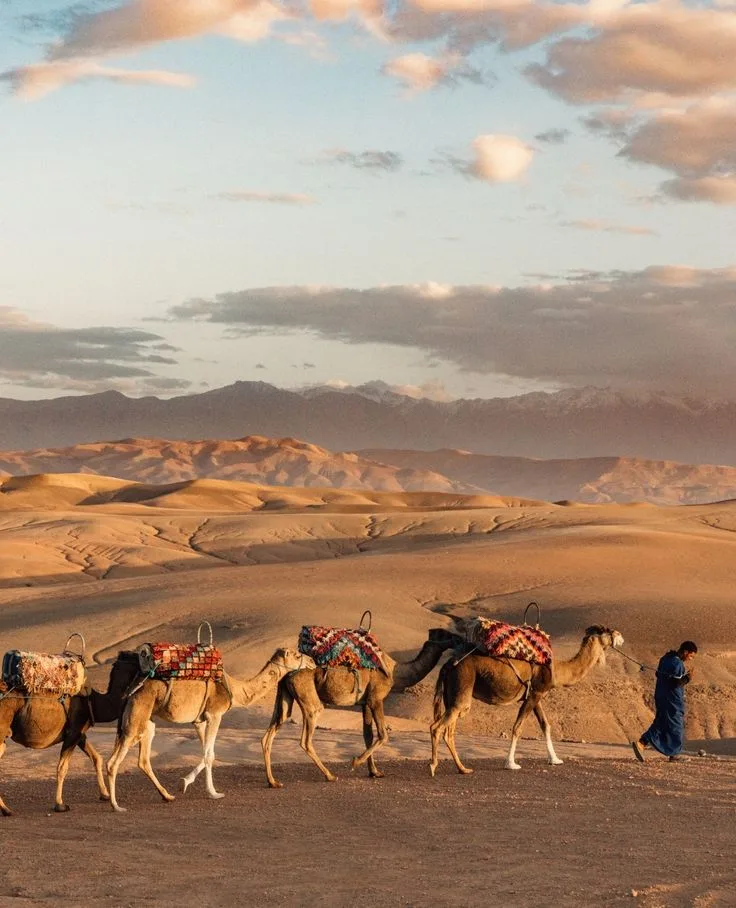
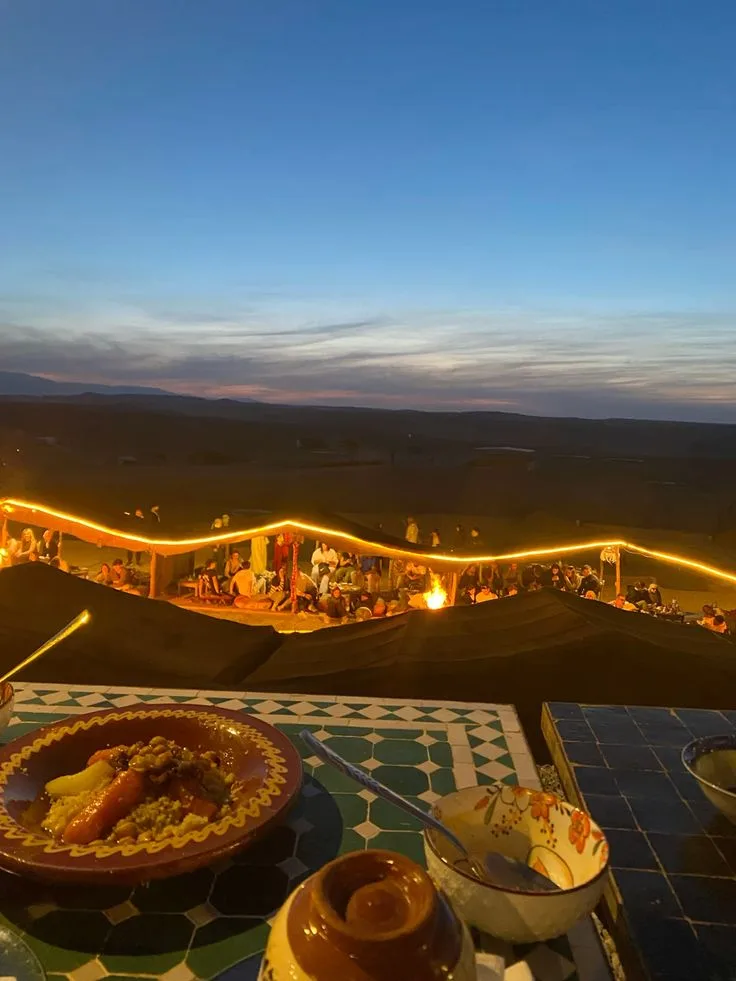
You don’t need equipment to enjoy this – the naked eye is enough to pick out constellations, the faint band of the Milky Way, and on a good night, the odd shooting star. If you want to go a step further, a basic stargazing app can help identify constellations in real time, and a simple tripod turns a smartphone into a decent night-sky camera with a long exposure setting. For travelers combining the desert night with more adventure, pairing an evening under the stars with the Agafay Quad, Camel & Dinner Show gives you the full range of the plateau in one outing – camel silhouettes at sunset, dinner by firelight, and stars once the show winds down.
Photographing the Agafay Night Sky
Even a basic camera setup can capture more than the naked eye once you know a few settings. A mirrorless or DSLR camera on a tripod, set to a wide aperture (f/2.8 or lower if your lens allows), an ISO between 1600 and 3200, and a shutter speed of around 15-20 seconds, is usually enough to pull the Milky Way’s band out of the dark. Smartphones with a dedicated night mode can manage a reasonable shot too, provided the phone stays completely still – resting it on a rock or a small travel tripod works far better than trying to hold it steady by hand. Turn off flash and any auto-brightening features first, since they wash out the stars rather than the landscape around them.
A Note on Light Pollution Around Marrakech
Morocco’s dry climate and relatively low regional light pollution outside its cities are part of why destinations like Agafay have become known for astro-tourism. The Morocco – Wikipedia notes the country’s largely arid interior climate, which is exactly the kind of dry air that keeps the sky clear for stargazing most of the year. It’s worth remembering that this is still a working landscape, home to nomadic herding communities, so camps are set up respectfully and away from settlements.
If you’d like to combine an evening of stargazing with a full day of desert activities, our team at Morocco Best Destination can help you time your visit around the moon phase for the darkest possible sky – just email contact@moroccobestdestination.com or call +212 661-757505 and we’ll build the right overnight for you.
How to go stargazing in Agafay from Marrakech
- Evening in the desert: our Agafay dinner show with quad and camel ride (from €45) ends after dark around the campfire — enough to see the stars on a clear night.
- Night in a camp (best option): with an overnight stay in an Agafay luxury camp (from €89) you can wait until the camp lights go down and the sky is at its darkest.
All our Agafay experiences include pickup from your hotel or riad in Marrakech. Message us on WhatsApp with your date and we will tell you the moon phase for that night.
Agafay stargazing FAQ
Can you see the Milky Way in the Agafay desert?
On clear, moonless nights and away from the camp lights, yes — especially in summer. Agafay is close to Marrakech, so the sky is a little brighter towards the city than in the Sahara.
Agafay or Merzouga for stargazing?
The Sahara at Merzouga has darker skies, far from any city, but it is 9–10 hours from Marrakech. Agafay is 45 minutes away and still gives a beautiful night sky, which makes it the easy choice for a short stay. See Agafay vs Sahara.
When is the best time to see the stars in Agafay?
Around the new moon, from about two hours after sunset. Dry, clear nights in late spring, summer and autumn are the most reliable; winter nights are clear too but cold, so bring warm layers.